
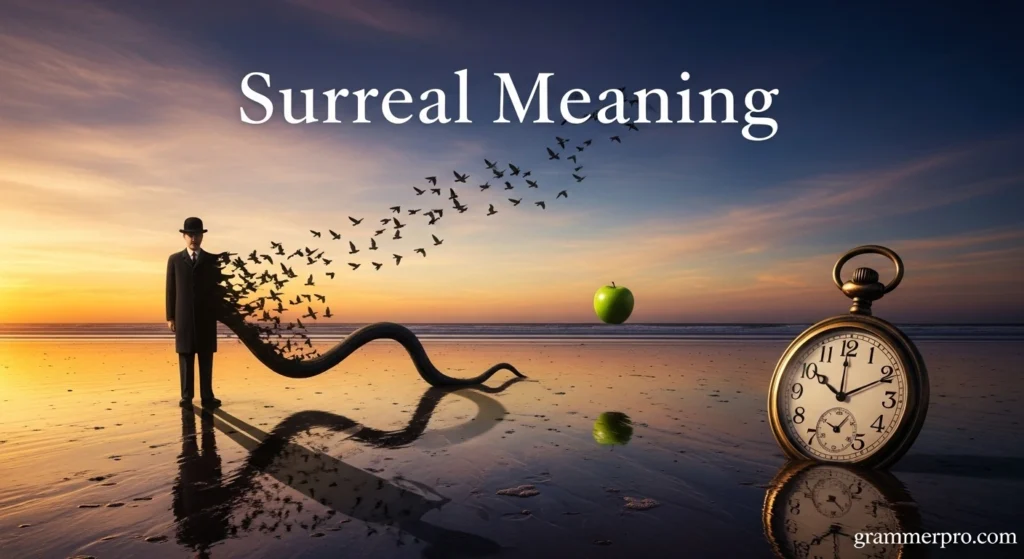
Have you ever scrolled through social media or a chat and stumbled upon the word that makes you pause and think, “Wait, what does that even mean?” People are increasingly curious about terms that seem unusual or unexpected in everyday conversation. Words like this pop up on TikTok captions, Instagram comments, and WhatsApp group chats, leaving many wondering if it’s slang, a joke, or just a random expression. Understanding these expressions is more than just keeping up with trends—it helps you communicate clearly, avoid misunderstandings, and even connect better with friends online. In this article, we’ll break down what this word really means, how it’s used across different platforms, and how you can respond naturally when you encounter it.
What the Term Means in Texting and Online Chats
In online chats, the expression is often used to describe something that feels dreamlike, bizarre, or oddly unreal. People use it when they experience a situation, image, or story that’s hard to believe or seems almost too strange to be true.
Key points:
- Indicates astonishment or disbelief.
- Can describe events, pictures, messages, or experiences.
- Often conveys a mix of wonder and confusion.
Short Meaning vs. Full Explanation
- Short meaning: Strange, dreamlike, or unbelievable.
- Full explanation: Used to describe moments that feel so unusual or unexpected that they seem outside the realm of ordinary reality. Online, it often emphasizes the emotional or visual impact rather than literal accuracy.
Origin and Popularity
The word comes from art and literature, especially the Surrealist movement in the early 20th century, which focused on bizarre, dreamlike imagery. Its transition into everyday internet language happened gradually:
- Early blogs and forums used it to describe odd experiences or weird photos.
- Social media platforms like Tumblr and Instagram amplified its use with memes and viral content.
- Today, it’s common in texting, TikTok captions, and reaction comments.
Platform-Specific Usage
- Often used in response to unusual messages or shocking news.
- Example: Friend 1: “I saw a dog riding a skateboard today.” Friend 2: “That’s surreal!”
- Common in comments under visually striking or uncanny photos.
- Example: Caption: “Sunset over the city skyline” Comment: “This view is surreal 😮”
TikTok
- Frequently appears in video captions highlighting bizarre or unbelievable scenarios.
- Example: “When your cat acts more human than you” → Caption: “Surreal vibes only 🫠”
Snapchat
- Used in snaps or stories to react to unexpected events.
- Example: Snap of a giant puddle reflecting city lights → “This is surreal 😳”
Common Misunderstandings
- Not always negative: People sometimes confuse it with “scary” or “bad,” but it usually just means unusual or extraordinary.
- Not literal: The term doesn’t mean “fake” or “made up,” even if something seems unbelievable.
- Avoid overuse: Using it for ordinary situations can make it lose impact.
Similar Terms and Alternatives
- Mind-blowing
- Unreal
- Dreamlike
- Trippy
- Out of this world
These words convey similar feelings of astonishment, wonder, or disbelief and can be used interchangeably in casual chats.
How to Reply When Someone Uses It
Responding depends on the tone of the conversation:
- Polite/Neutral: “Yeah, it really is something else!”
- Casual: “Right? Totally unreal 😂”
- Flirty (if appropriate): “Surreal… just like you 😏”
- Boundary-respecting: “Interesting! Can you explain what you mean?”
Matching the energy of the original message is usually the best approach.
Popularity and Current Trends
This expression remains widely used, especially among Gen-Z and Millennials on visual platforms like TikTok and Instagram. Its popularity has grown due to its versatility in describing everything from memes and viral content to life events that feel almost unbelievable. While newer slang terms come and go, this word has maintained a steady presence thanks to its adaptability.
People Also Ask (FAQ)
Q1: What does it mean when someone says something is surreal online? A1: It means the situation or image feels strange, dreamlike, or almost too unusual to believe.
Q2: Is it slang or formal language? A2: It’s casual slang commonly used in texting and social media, not formal writing.
Q3: Can I use it in everyday conversation? A3: Yes, especially when describing unusual or surprising events, but it’s mostly informal.
Q4: Does it have a negative meaning? A4: Not usually—it often conveys amazement or curiosity rather than disapproval.
Q5: Are there similar expressions I can use? A5: Yes, alternatives include “unreal,” “trippy,” “dreamlike,” or “mind-blowing.”
Conclusion
Understanding this term helps you navigate modern online communication with confidence. Whether you’re reacting to a jaw-dropping photo, a bizarre story, or a meme that seems too strange to be real, knowing how to interpret and respond to it ensures your conversations feel natural and engaging. By recognizing its meaning, context, and platform-specific usage, you can join the trend without missing a beat—or a like.

Michael Trent is a professional editor and content strategist passionate about perfecting written communication. His articles focus on common writing mistakes, sentence flow, and modern grammar trends that every learner should know.