
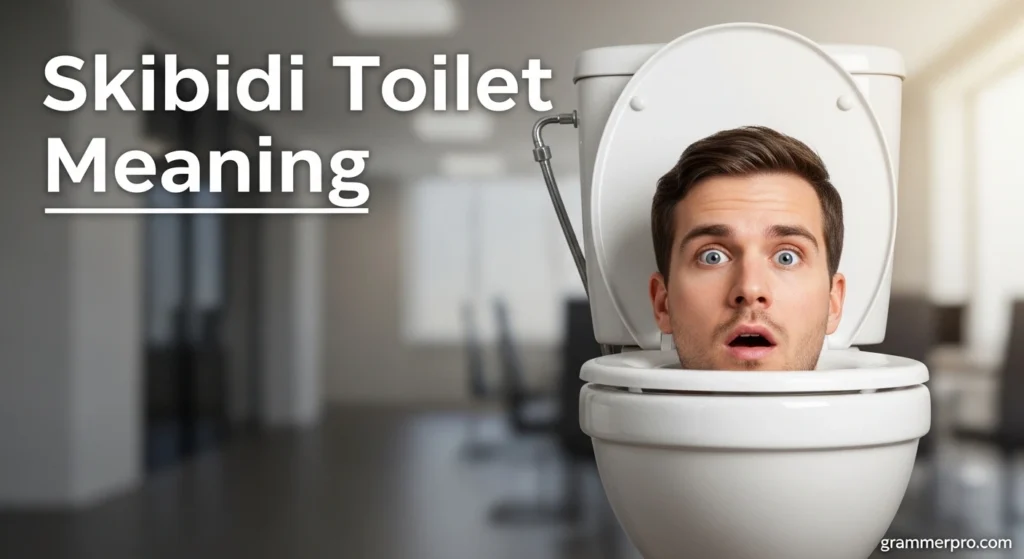
If you’ve spent any time online lately—especially on short-video platforms—you’ve probably seen people reference a bizarre toilet character, strange music, or spammy comments that make you pause and think, what is this even supposed to mean? That curiosity is exactly why so many people search for explanations of viral internet phrases. Online slang, memes, and expressions move fast, and missing the context can make conversations confusing or awkward. Understanding modern internet language helps you keep up with trends, avoid misunderstandings, and respond confidently in chats or comments. This guide breaks everything down in simple terms, so even if you’re totally new to internet culture, you’ll understand where this phrase came from, how people use it today, and what they usually don’t mean by it.
What Does This Phrase Mean in Texting and Online Chats?
In online conversations, this term doesn’t have a deep dictionary definition. Instead, it’s mainly used as:
- A meme reference
- A joke or ironic comment
- A way to signal chaotic, absurd humor
When someone uses it in a chat, they’re usually not talking about a real toilet. They’re referencing a viral meme style that’s meant to be funny, weird, or intentionally confusing.
Simple Texting Meaning
In texting or comments, it often means:
- “This is random or chaotic”
- “I’m joking”
- “This feels like meme humor”
It’s more about vibe than literal meaning.
Short Meaning and Full Form (If Any)
- Short meaning: A meme-based expression used for humor or irony
- Full form: None
This phrase is not an acronym and doesn’t stand for anything. It’s simply a name tied to a viral internet series.
Origin and Rise in Popularity
Where Did It Come From?
The phrase became popular after a surreal animated video series on YouTube featuring:
- A human head coming out of a toilet
- Repetitive music
- Over-the-top visuals and action
The creator used absurd humor on purpose, which made the videos stand out.
Why Did It Go Viral?
It exploded because:
- Short clips were easy to remix
- The visuals were shocking and funny
- Gen-Z audiences love ironic, “nonsense” humor
Soon, the phrase turned into a comment meme, reaction joke, and even a catchphrase.
How It’s Used in Real-Life Conversations
Casual Chat Examples
- Friend: “This video makes zero sense.” You: “Yeah, total meme chaos 😂”
- Commenter: “Why is my feed like this?” Reply: “Welcome to internet humor.”
Most of the time, it’s playful and unserious.
Platform-Specific Usage
- Used jokingly in group chats
- Often paired with laughing emojis
- Signals random humor or sarcasm
- Common in Reels comments
- Used to react to weird or chaotic videos
- Sometimes posted just to be ironic
TikTok
- Strongest presence here
- Connected to edits, sounds, and memes
- Often used without explanation
Snapchat
- Less common, but shows up in private jokes
- Used between friends who already know the meme
Slang Meaning vs Literal Meaning
It’s important to separate:
- Slang usage: Meme, joke, internet humor
- Literal meaning: A toilet (which is not what people mean)
If someone uses it online, they’re almost never being literal.
Common Misunderstandings and What It Does Not Mean
Many people get confused at first. Here’s what it does not mean:
- ❌ Not a secret code or hidden message
- ❌ Not a rude or offensive insult by default
- ❌ Not related to real plumbing or bathrooms
It’s just meme culture doing what meme culture does best—being weird.
Similar Slang Terms and Related Memes
If you understand this phrase, you’ll also recognize humor like:
- “Ohio memes”
- “NPC energy”
- “Brainrot”
- “It’s giving chaos”
- “Random core”
All of these rely on irony and exaggerated internet humor.
How to Reply When Someone Uses It
Polite Responses
- “I’ve seen that meme too.”
- “Internet humor is wild these days.”
Casual Responses
- “Yeah, that’s meme culture for you.”
- “My feed is full of that stuff 😂”
Flirty (Only If Context Fits)
- “Guess we’re both deep in meme land now 😄”
- “You’ve got interesting taste in memes.”
Boundary-Respecting Responses
- “I don’t really get that meme.”
- “Not my kind of humor, but okay.”
You don’t have to play along if you don’t want to.
Is It Still Popular? Current Usage Trends
The phrase is still recognizable, but like most memes:
- Peak popularity has passed
- It’s now part of Gen-Z internet culture history
- Still used ironically or nostalgically
New memes may replace it, but people still understand the reference.
People Also Ask (FAQ)
What does this phrase mean on TikTok?
It’s used as a meme reference to react to chaotic or absurd content.
Is it offensive?
No, it’s generally harmless unless used in a rude context.
Why do people spam it in comments?
To be ironic, funny, or intentionally confusing.
Is it a Gen-Z thing?
Mostly yes, though anyone online can encounter it.
Do I need to respond when someone uses it?
No. You can joke back, ignore it, or ask what they mean.
Conclusion
This viral phrase is a perfect example of modern internet humor—random, ironic, and community-driven. It doesn’t have a serious definition, acronym, or hidden meaning. Instead, it represents a moment in online culture shaped by memes, short videos, and Gen-Z creativity. Once you understand the context, it’s easy to recognize when people are joking, being ironic, or just having fun. Now, when you see it in chats or comments, you can respond confidently, laugh it off, or set boundaries—whatever feels right for you.

David Langford is a language expert and grammar enthusiast with over 10 years of teaching experience. He specializes in simplifying complex grammar rules and helping writers express ideas with clarity. At GrammerPro, David shares practical guides for mastering English usage.