
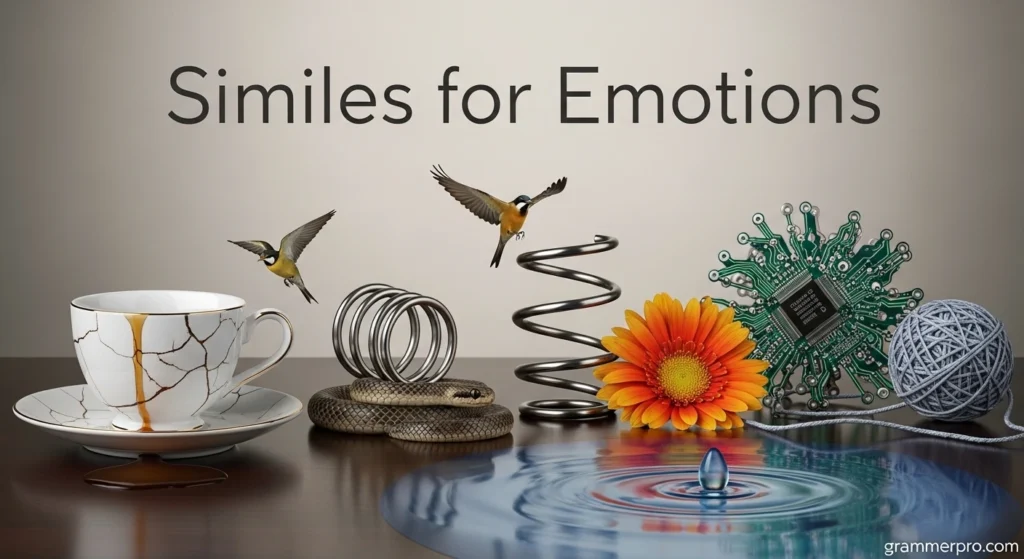
Emotions can be hard to explain with plain words. That’s why writers, speakers, and even everyday texters often turn to similes. A simile is a figure of speech that compares one thing to another using words like “as” or “like.” Instead of simply saying how someone feels, similes help readers see, feel, and experience emotions more vividly.
In figurative language, similes are especially popular because they make abstract emotions—such as love, fear, joy, or sadness—feel concrete and relatable. They add color to writing, deepen emotional impact, and make communication more engaging. Whether you’re crafting a story, writing poetry, posting on social media, or sending a heartfelt message, similes can instantly elevate your expression.
Below are 25 carefully explained similes, each capturing a different emotional shade, along with meanings, tone, best usage contexts, and natural examples for daily life and writing.
1. Emotions like a roller coaster
Meaning & Definition: This simile describes rapidly changing or intense emotions, moving between highs and lows.
Tone: Dramatic, expressive Best Usage: Storytelling, personal experiences, emotional journeys
Examples:
- Her emotions were like a roller coaster after the sudden news.
- The movie took my emotions on a roller coaster.
- His first year at college felt like a roller coaster of feelings.
Daily/Texting Use:
- “This week has been an emotional roller coaster 😵💫”
2. Emotions like a stormy sea
Meaning: Represents overwhelming, turbulent emotions that are hard to control.
Tone: Serious, intense Best Usage: Emotional conflict, inner struggle
Examples:
- His emotions were like a stormy sea during the argument.
- She struggled to stay calm while emotions crashed like waves.
- Grief turned his heart into a stormy sea.
3. Emotions like a bubbling volcano
Meaning: Suggests emotions building up and ready to erupt.
Tone: Tense, powerful Best Usage: Anger, frustration, suppressed feelings
Examples:
- Her emotions bubbled like a volcano before she spoke.
- He stayed silent, but emotions boiled inside like lava.
- Years of resentment turned into a volcanic burst.
4. Emotions like a warm blanket
Meaning: Describes comforting, safe, and soothing emotions.
Tone: Gentle, comforting Best Usage: Love, care, nostalgia
Examples:
- Her kindness wrapped around him like a warm blanket.
- The familiar smell filled him with blanket-like comfort.
- Home felt like a warm emotional blanket.
5. Emotions like fireworks
Meaning: Expresses sudden, bright, and exciting emotional reactions.
Tone: Energetic, joyful Best Usage: Happiness, excitement, romance
Examples:
- Emotions exploded like fireworks when they met again.
- Winning the award set off fireworks inside her chest.
- Their reunion sparked emotional fireworks.
6. Emotions like a ticking clock
Meaning: Represents anxious or pressured emotions, often counting down to something.
Tone: Tense, suspenseful Best Usage: Stressful situations, anticipation
Examples:
- His emotions ticked like a clock before the exam.
- Waiting made her nerves louder than a ticking clock.
- The silence amplified his ticking emotions.
7. Emotions like a heavy weight
Meaning: Shows emotional burden or deep sadness.
Tone: Somber, reflective Best Usage: Grief, responsibility, guilt
Examples:
- Sadness pressed on her emotions like a heavy weight.
- He carried regret like a weight on his heart.
- The news added emotional weight to his shoulders.
8. Emotions like floating clouds
Meaning: Describes light, calm, or dreamy emotional states.
Tone: Peaceful, soft Best Usage: Relaxation, contentment
Examples:
- His emotions drifted like soft clouds.
- She felt emotionally light, as if floating.
- The vacation left her emotions cloud-like and calm.
9. Emotions like a tangled knot
Meaning: Represents confusion or mixed feelings.
Tone: Thoughtful, conflicted Best Usage: Emotional dilemmas
Examples:
- Her emotions were tied in a tangled knot.
- He couldn’t untangle how he felt.
- The decision left her emotionally knotted.
10. Emotions like a sudden spark
Meaning: Shows instant emotional connection or reaction.
Tone: Romantic, lively Best Usage: Attraction, inspiration
Examples:
- A spark of emotion ignited when their eyes met.
- His words lit a sudden emotional spark.
- Creativity sparked emotions instantly.
11. Emotions like melting ice
Meaning: Indicates emotional softening or opening up.
Tone: Warm, hopeful Best Usage: Healing, trust-building
Examples:
- Her kindness melted his icy emotions.
- Slowly, his guard melted away.
- Time melted their emotional distance.
12. Emotions like a broken mirror
Meaning: Describes fragmented or shattered feelings.
Tone: Deep, emotional Best Usage: Heartbreak, trauma
Examples:
- His emotions felt like a broken mirror.
- The betrayal shattered her emotional reflection.
- Healing meant piecing emotions back together.
13. Emotions like a rising tide
Meaning: Shows emotions gradually becoming stronger.
Tone: Build-up, expressive Best Usage: Love, anger, anticipation
Examples:
- Anger rose like a steady tide.
- Excitement slowly washed over her.
- Hope rose with each passing day.
14. Emotions like a silent shadow
Meaning: Represents hidden or unspoken feelings.
Tone: Subtle, reflective Best Usage: Internal conflict
Examples:
- Fear followed him like a silent shadow.
- Her emotions lingered unspoken.
- Regret shadowed his happiness.
15. Emotions like burning fire
Meaning: Shows intense passion or rage.
Tone: Strong, vivid Best Usage: Love, anger, ambition
Examples:
- Passion burned like fire inside her.
- His anger flared instantly.
- Determination burned brighter each day.
16. Emotions like falling rain
Meaning: Describes sadness or emotional release.
Tone: Melancholic, gentle Best Usage: Crying, reflection
Examples:
- Tears fell like emotional rain.
- Grief poured down quietly.
- Sadness drizzled through his thoughts.
17. Emotions like a locked door
Meaning: Shows emotional distance or guarded feelings.
Tone: Reserved Best Usage: Trust issues
Examples:
- His emotions stayed behind a locked door.
- She struggled to open up.
- Time slowly unlocked his heart.
18. Emotions like flying birds
Meaning: Represents freedom and emotional relief.
Tone: Uplifting Best Usage: Liberation, happiness
Examples:
- Her emotions felt free like birds in the sky.
- Relief lifted his heart.
- Joy soared after the truth came out.
19. Emotions like cracked glass
Meaning: Indicates vulnerability and emotional fragility.
Tone: Delicate Best Usage: Sensitive moments
Examples:
- His emotions felt like cracked glass.
- One word could break her.
- Trust made emotions stronger.
20. Emotions like a rushing river
Meaning: Describes unstoppable emotional flow.
Tone: Powerful Best Usage: Overwhelming feelings
Examples:
- Feelings rushed through him like a river.
- Emotions overflowed unexpectedly.
- Love swept everything away.
21. Emotions like frozen ice
Meaning: Represents emotional numbness.
Tone: Cold, distant Best Usage: Trauma, shock
Examples:
- Shock froze his emotions.
- She felt emotionally numb.
- Time slowly thawed her heart.
22. Emotions like blooming flowers
Meaning: Shows emotional growth and positivity.
Tone: Optimistic Best Usage: Healing, love
Examples:
- Happiness bloomed inside her.
- Confidence grew like flowers.
- Hope blossomed again.
23. Emotions like a whisper
Meaning: Represents subtle or gentle feelings.
Tone: Soft Best Usage: Quiet moments
Examples:
- Love whispered through her thoughts.
- Fear spoke softly.
- Emotions murmured beneath the surface.
24. Emotions like crashing thunder
Meaning: Shows sudden, loud emotional reactions.
Tone: Dramatic Best Usage: Shock, anger
Examples:
- Anger struck like thunder.
- His words boomed emotionally.
- The truth hit hard.
25. Emotions like a steady flame
Meaning: Represents lasting, controlled emotions.
Tone: Balanced Best Usage: Commitment, loyalty
Examples:
- Love burned as a steady flame.
- His dedication never wavered.
- Calm emotions guided her choices.
Conclusion
Similes transform emotions from simple statements into powerful experiences. By comparing feelings to familiar images, they make writing more vivid, relatable, and emotionally engaging. Whether you’re expressing joy, sorrow, love, or conflict, using similes adds depth and creativity to your language. Mastering them can elevate storytelling, strengthen communication, and help readers truly feel your words.
FAQs
1. Why are similes effective for expressing emotions? They turn abstract feelings into clear, relatable images.
2. Can similes be used in daily conversation? Yes, they work well in texting, social media, and casual speech.
3. Are similes and metaphors the same? No. Similes use “like” or “as,” while metaphors do not.
4. Do similes improve creative writing? Absolutely. They add imagery, emotion, and depth.
5. Can similes help with emotional clarity? Yes, they help explain complex feelings more clearly.

Michael Trent is a professional editor and content strategist passionate about perfecting written communication. His articles focus on common writing mistakes, sentence flow, and modern grammar trends that every learner should know.