
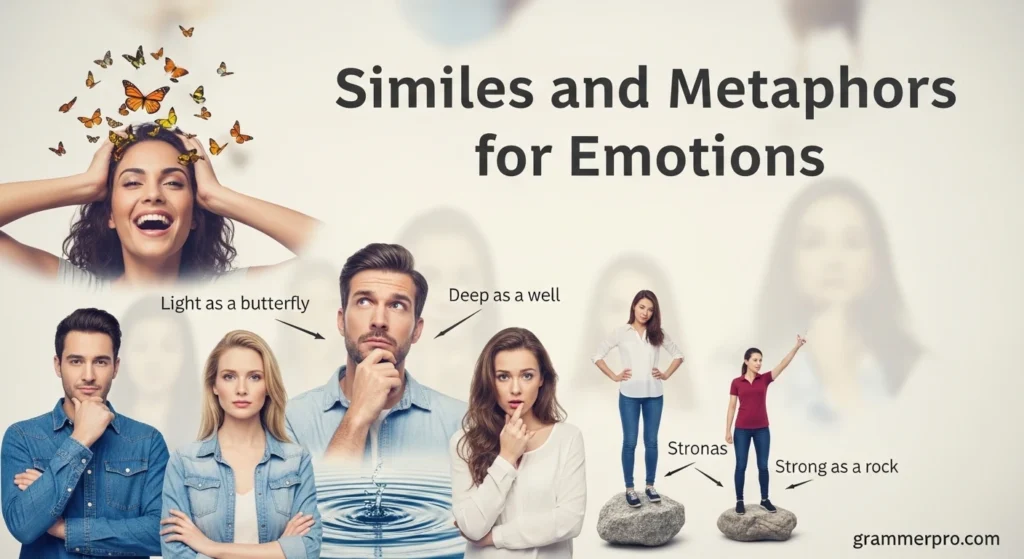
Emotions are often difficult to explain directly. That’s why figurative language plays such an important role in communication. Similes and metaphors help us describe feelings by comparing them to familiar images, experiences, or sensations. Instead of simply saying “I’m sad” or “I’m happy,” we can paint a picture that helps others feel what we feel.
Similes use words like “as” or “like” to create comparisons, while metaphors make direct connections. Both are commonly used in storytelling, poetry, daily conversations, texting, and even social media captions. They make language more vivid, relatable, and emotionally rich. Below are 25 carefully explained similes and metaphors for emotions, each with meaning, tone, best usage, and real-life examples to help you use them naturally.
1. Happiness Like Sunshine After Rain
Meaning & Definition: Compares happiness to the warmth and relief felt when the sun appears after a storm. Tone: Warm, hopeful, uplifting Best Used When: Describing joy after hardship
Examples:
- Her laughter felt like sunshine after rain.
- Seeing my family again was happiness like sunshine breaking through clouds.
- His success brought joy like sunshine after a long storm.
Texting Example: “Getting your message felt like sunshine after rain ☀️”
2. Anger Like a Volcano Ready to Erupt
Meaning: Describes bottled-up anger that may explode suddenly. Tone: Intense, dramatic Best Used When: Showing suppressed rage
Examples:
- His anger was like a volcano ready to erupt.
- She stayed quiet, but her emotions were like lava beneath the surface.
- The tension in the room felt volcanic.
3. Sadness Like a Heavy Cloud
Meaning: Compares sadness to an oppressive, lingering presence. Tone: Melancholic, reflective Best Used When: Expressing emotional weight
Examples:
- Sadness hung over her like a heavy cloud.
- His mood was dark like a sky before rain.
- Grief followed her everywhere like a shadow.
4. Love Like a Deep Ocean
Meaning: Represents love as vast, deep, and powerful. Tone: Romantic, emotional Best Used When: Expressing deep affection
Examples:
- Her love was like a deep ocean—calm yet endless.
- He fell into love like diving into deep water.
- Their bond felt ocean-deep.
5. Fear Like Ice in the Veins
Meaning: Shows fear as paralyzing and chilling. Tone: Serious, suspenseful Best Used When: Describing sudden shock
Examples:
- Fear ran through him like ice in his veins.
- The silence froze her with fear.
- His words sent an icy fear through the room.
6. Excitement Like Fireworks
Meaning: Expresses sudden, explosive joy. Tone: Energetic, celebratory Best Used When: Sharing good news
Examples:
- Her excitement burst like fireworks.
- The announcement sparked fireworks of emotion.
- He couldn’t contain his excitement.
Daily Use: “I’m so excited—it’s like fireworks in my head!”
7. Anxiety Like a Tight Knot
Meaning: Describes nervous tension and unease. Tone: Relatable, tense Best Used When: Talking about stress
Examples:
- Anxiety twisted his stomach into a knot.
- She felt tied up with worry.
- The interview made her chest feel tight.
8. Hope Like a Flickering Candle
Meaning: Shows fragile but persistent optimism. Tone: Gentle, inspiring Best Used When: Difficult situations
Examples:
- Hope flickered like a candle in the dark.
- Even then, hope refused to go out.
- He protected his hope carefully.
9. Jealousy Like Green-Eyed Fire
Meaning: Portrays envy as consuming and destructive. Tone: Negative, intense Best Used When: Highlighting emotional conflict
Examples:
- Jealousy burned inside her.
- His words were fueled by envy.
- Green-eyed fire clouded his judgment.
10. Calm Like a Still Lake
Meaning: Describes emotional peace and balance. Tone: Peaceful, soothing Best Used When: Relaxed states
Examples:
- Her mind was calm like a still lake.
- Meditation left him emotionally still.
- The moment felt serene.
11. Guilt Like a Heavy Stone
Meaning: Shows guilt as emotionally burdensome. Tone: Serious, reflective Best Used When: Regretful moments
Examples:
- Guilt weighed on him like a stone.
- She carried her mistakes heavily.
- The truth lifted the burden.
12. Pride Like a Swelling Chest
Meaning: Represents confidence and self-worth. Tone: Positive, strong Best Used When: Achievements
Examples:
- Pride filled his chest.
- She stood tall with pride.
- His success made him glow.
13. Loneliness Like an Empty Room
Meaning: Shows emotional emptiness and isolation. Tone: Somber Best Used When: Emotional distance
Examples:
- Loneliness echoed like an empty room.
- He felt hollow inside.
- Silence made it worse.
14. Confusion Like a Foggy Road
Meaning: Represents lack of clarity. Tone: Neutral, thoughtful Best Used When: Uncertainty
Examples:
- His thoughts were lost in fog.
- She couldn’t see the path ahead.
- Confusion clouded his judgment.
15. Relief Like Dropping a Heavy Bag
Meaning: Shows release from stress. Tone: Positive, relaxed Best Used When: After pressure ends
Examples:
- Relief washed over her.
- The burden finally lifted.
- He could breathe again.
16. Joy Like a Child’s Laughter
Meaning: Pure, innocent happiness. Tone: Lighthearted Best Used When: Simple pleasures
Examples:
- Joy rang out like laughter.
- Her smile was contagious.
- The moment felt carefree.
17. Anguish Like a Broken Mirror
Meaning: Emotional pain and fragmentation. Tone: Dark, emotional Best Used When: Deep hurt
Examples:
- His heart felt shattered.
- Pain reflected in pieces.
- She struggled to feel whole.
18. Gratitude Like a Warm Blanket
Meaning: Comforting appreciation. Tone: Cozy, heartfelt Best Used When: Thankfulness
Examples:
- Gratitude wrapped around her.
- He felt deeply thankful.
- Kindness warmed his heart.
19. Shock Like Thunder
Meaning: Sudden emotional impact. Tone: Dramatic Best Used When: Unexpected news
Examples:
- The news hit like thunder.
- Shock left him speechless.
- The moment stunned everyone.
20. Confidence Like Standing Tall
Meaning: Emotional strength and assurance. Tone: Empowering Best Used When: Self-belief
Examples:
- She stood tall with confidence.
- His voice carried certainty.
- Belief changed everything.
21. Regret Like a Lingering Echo
Meaning: Past mistakes that won’t fade. Tone: Reflective Best Used When: Remorse
Examples:
- Regret echoed in his mind.
- The past wouldn’t stay quiet.
- She learned from it.
22. Passion Like a Burning Flame
Meaning: Intense emotion or desire. Tone: Energetic Best Used When: Motivation
Examples:
- Passion fueled his work.
- Her eyes burned with purpose.
- The fire never faded.
23. Nervousness Like Butterflies
Meaning: Light anxiety or anticipation. Tone: Casual, relatable Best Used When: Mild stress
Examples:
- Butterflies filled her stomach.
- He felt jittery.
- Excitement mixed with nerves.
24. Comfort Like Home
Meaning: Emotional safety and familiarity. Tone: Warm Best Used When: Trust and care
Examples:
- Being with her felt like home.
- His presence was comforting.
- Safety surrounded them.
25. Emotional Growth Like Blooming Flowers
Meaning: Healing and personal development. Tone: Hopeful Best Used When: Progress
Examples:
- She blossomed emotionally.
- Growth followed hardship.
- Healing took time.
Conclusion: Why Similes Bring Emotions to Life
Using similes and metaphors transforms plain emotional statements into vivid experiences. They help readers connect, visualize, and empathize. Whether you’re writing creatively, texting a friend, or crafting meaningful content, figurative language adds depth, color, and authenticity. Mastering emotional similes empowers you to express feelings with clarity and creativity—making your words truly unforgettable.
FAQs
1. Why are similes effective for expressing emotions? They turn abstract feelings into relatable images, making emotions easier to understand.
2. Are similes and metaphors used in daily conversation? Yes, people use them naturally in speech, texting, and social media.
3. Can similes improve creative writing? Absolutely. They add imagery, emotion, and engagement.
4. What’s the difference between a simile and a metaphor? Similes use “like” or “as,” while metaphors make direct comparisons.
5. How can I practice using emotional similes? Start by describing your feelings using comparisons to nature, objects, or experiences.

Emily Carter is a grammar coach and freelance writer with a deep love for the English language. She writes engaging lessons and tips on punctuation, spelling, and sentence structure to help learners communicate clearly and effectively.