
Understanding language and literary devices is an essential skill for students. One of the most powerful tools in writing and communication is the simile, which allows a student to convey complex ideas in vivid and relatable ways. In this article, we will explore simile examples for students, explain their uses, and demonstrate how students can apply similes effectively in essays, creative writing, and everyday communication. By the end, learners will not only understand what similes are but also how to craft them to enhance clarity, imagery, and engagement in their writing.
What Are Similes?
A simile is a figure of speech that compares two different things using the words “like” or “as.” Similes make abstract ideas concrete and allow the audience to visualize or feel the concept being described. For students, learning to use similes is crucial because it improves writing skills, boosts creativity, and helps communicate ideas more effectively.
Examples of simple similes include:
- Her smile was as bright as the sun.
- He was as brave as a lion.
- The classroom was as quiet as a library.
These comparisons make descriptions more vivid and engaging than plain statements.
Why Similes Matter for Students
Similes are not just literary tools—they have practical applications in education and communication:
- Enhance Writing Skills: Using similes enriches essays, stories, and reports.
- Improve Comprehension: Relating abstract concepts to tangible images helps students understand and remember material.
- Develop Creativity: Creating original similes encourages imaginative thinking.
- Engage Readers: Similes make writing more appealing and memorable.
Students who master similes gain an advantage in both academic and personal communication, making their writing more dynamic and expressive.
Types of Similes and How Students Can Use Them
Similes can be categorized based on their purpose or style. Understanding these types helps students use them effectively.
1. Descriptive Similes
These similes describe a person, object, or situation in detail.
- The night was as dark as coal.
- Her hair flowed like a river of silk.
Descriptive similes are useful in creative writing, helping the reader visualize scenes and characters.
2. Comparative Similes
These focus on comparing qualities or behaviors.
- He ran like the wind.
- She was as stubborn as a mule.
Comparative similes often make abstract qualities tangible and relatable.
3. Humorous Similes
These similes add comedy or lightheartedness to writing.
- He was as confused as a cat in a bathtub.
- She danced like a penguin on ice.
Humorous similes are effective in engaging the audience, especially in informal writing or presentations.
4. Emotional Similes
Emotional similes convey feelings or moods.
- Her heart was as heavy as a stone.
- He felt like a leaf caught in the wind.
These similes help students express emotions more vividly in narratives, essays, and reflections.
Common Simile Examples for Students
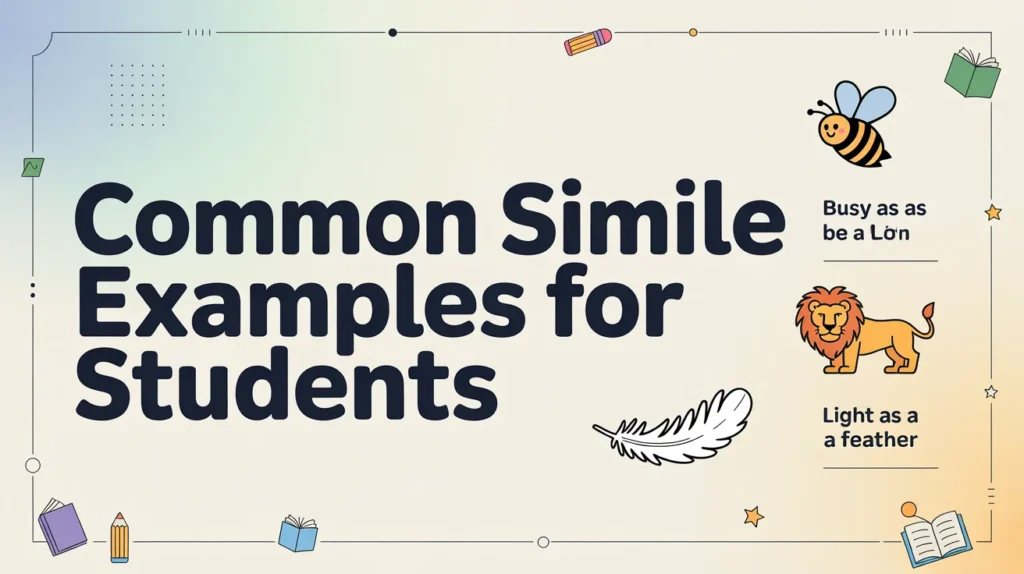
Students often benefit from ready-to-use examples to enhance their writing. Here is a categorized list of simile examples for students:
Nature Similes
- The clouds were like cotton candy in the sky.
- Her eyes shone like stars in the night.
- The river flowed as smoothly as glass.
Animal Similes
- He was as brave as a lion.
- She was as busy as a bee.
- The baby cried like a kitten.
Daily Life Similes
- The classroom was as quiet as a library.
- The exam felt like climbing a mountain.
- His bag was as heavy as a sack of bricks.
Academic Similes
- Learning math was like solving a complex puzzle.
- Her essay was as clear as crystal.
- He memorized the poem like a parrot repeats words.
Emotional Similes
- He felt as nervous as a cat on a hot tin roof.
- Her heart raced like a drum in a parade.
- She was as happy as a child on a holiday morning.
These examples are versatile and can be used in essays, creative writing assignments, and even spoken presentations.
How to Create Your Own Similes
Creating original similes is an essential skill for students. Here’s a step-by-step guide:
- Identify the concept or emotion: Decide what you want to describe—an object, action, or feeling.
- Think of tangible comparisons: Relate the concept to something familiar or visually striking.
- Use “like” or “as”: Construct the simile to connect the two ideas clearly.
- Keep it concise: Short, impactful similes are more effective than long, complex ones.
- Test for clarity: Make sure your simile communicates the intended meaning.
Example:
- Concept: Feeling nervous before a presentation
- Tangible comparison: A cat walking on a slippery roof
- Simile: I felt as nervous as a cat walking on a slippery roof.
Encouraging students to experiment with imagery enhances creativity and writing confidence.
Similes in Academic Writing
Similes are not just for stories—they can be effectively used in academic writing to explain abstract concepts:
- The molecule moved like dancers in a choreographed routine.
- The economic system functioned like a well-oiled machine.
- The concept of gravity was as invisible as the wind but equally powerful.
Using similes in academic writing can make complex ideas more relatable and easier to understand.
Using Similes in Literature and Storytelling
Similes are fundamental in storytelling because they allow readers to see the world through the narrator’s perspective. Students can learn from literary examples:
- Shakespeare: “Life’s but a walking shadow, a poor player that struts and frets his hour upon the stage.”
- J.K. Rowling: “He looked as though he had been poured into his clothes backward.”
- Shel Silverstein: “Her smile was as bright as the sun on a summer day.”
Analyzing such examples teaches students how to blend imagination and clarity in their own writing.
Teaching Similes to Students
Educators can guide students in understanding and using similes effectively:
- Use visual aids: Show images and ask students to create similes describing them.
- Compare emotions: Ask students to write similes expressing happiness, sadness, or excitement.
- Incorporate games: Activities like “Simile Bingo” encourage creativity.
- Peer review: Students can share similes in groups and refine them collaboratively.
These strategies make learning similes interactive, memorable, and fun.
Common Mistakes Students Make with Similes
Understanding common errors helps students avoid pitfalls:
- Overusing clichés: As busy as a bee is fine, but originality is preferred.
- Mixing metaphors: Confusing similes with metaphors can create unclear comparisons.
- Lack of clarity: Using obscure or complex comparisons may confuse the reader.
- Excessive length: Long similes reduce impact and readability.
Encouraging students to practice and revise their similes improves precision and effectiveness.
Benefits of Learning Similes for Students
Mastering similes provides multiple benefits:
- Enhances descriptive writing skills
- Boosts creativity and imagination
- Improves communication and comprehension
- Makes writing more engaging and memorable
- Provides tools for academic and literary success
These benefits extend beyond school, enriching communication in professional and personal contexts.
FAQs About Simile Examples for Students
1. What is a simile and why is it important for students?
A simile is a figure of speech comparing two things using “like” or “as.” It helps students describe ideas vividly and enhance creative writing.
2. How can students create original similes?
Identify the emotion or object, think of a relatable comparison, and construct a concise sentence using “like” or “as.”
3. Can similes be used in academic writing?
Yes, similes make abstract concepts more understandable and relatable, improving clarity and engagement.
4. What are common mistakes students make with similes?
Overusing clichés, unclear comparisons, mixing metaphors, and excessively long similes are common errors.
5. How can teachers help students learn similes effectively?
Teachers can use visual aids, peer reviews, interactive activities, and storytelling exercises to teach similes.
Conclusion
Similes are essential tools for students to express ideas creatively, clearly, and memorably. By studying simile examples for students, learners can enhance descriptive writing, boost comprehension, and develop imaginative thinking. Whether in essays, storytelling, or everyday communication, similes transform abstract concepts into vivid imagery. Students who practice creating and analyzing similes gain confidence in writing and communication, making their academic work more engaging and impactful. Mastering similes is not just an academic exercise—it is a lifelong skill that enriches expression and creativity.

Michael Trent is a professional editor and content strategist passionate about perfecting written communication. His articles focus on common writing mistakes, sentence flow, and modern grammar trends that every learner should know.