
People often search this term after seeing it in a message, comment, or username and feeling unsure what the sender meant. Online conversations move fast, and words can carry very different meanings depending on context, culture, or platform. A single unfamiliar term can change the tone of a chat from friendly to confusing. That’s why understanding internet expressions, borrowed words, and slang matters so much today. Many online terms don’t come from English at all—they’re adapted from other languages, pop culture, games, or trends on social media. Knowing how and where a word is used helps you avoid misunderstandings, reply confidently, and stay in sync with modern digital communication. In this guide, we’ll break the term down in a simple, beginner-friendly way so you can understand what it usually means online, what it does not mean, and how to respond naturally when you see it in chats or comments.
What Does “Diabolo” Mean in Texting and Online Chats?
In most online conversations, “diabolo” is not a common English slang term with a fixed meaning like “LOL” or “BRB.” Instead, its meaning depends heavily on context.
In texting or social media, people usually use it in one of these ways:
- As a nickname or username
- As a stylish or edgy word borrowed from another language
- As a reference to something specific (a game, drink, or object)
Because it isn’t standard internet slang, you should always look at how and where it’s used before assuming the meaning.
Short Meaning and Full Form (If Any)
Is There a Short Form?
- No widely accepted short form exists for this word in texting.
Does It Have a Full Form?
- It is not an acronym, so it does not stand for multiple words.
It’s a standalone word borrowed from other languages and real-world meanings rather than a shortened chat expression.
Origin and Background of the Word
Linguistic Roots
- Comes from French and Italian
- Derived from a word meaning “little devil”
Original Uses
Historically, the word has referred to:
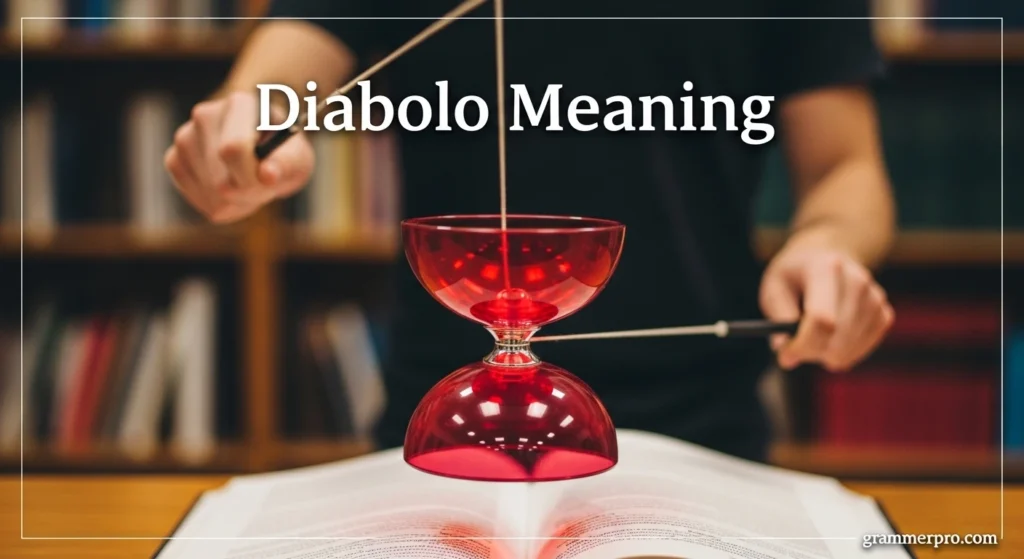
- A traditional juggling toy with two cups and a string
- A popular European drink (lemonade mixed with syrup or beer)
- A symbolic or playful reference to something mischievous
These older meanings often influence how people use the term online today.
How It’s Used in Real-Life Online Conversations
Because the word isn’t fixed slang, people use it creatively. Here are some natural examples:
Example 1 (Playful nickname):
“You’re such a little diabolo 😈”
Example 2 (Username or persona):
“Follow @diabolo.fx for edits”
Example 3 (Cultural reference):
“Tried a diabolo drink today, it was refreshing!”
The meaning becomes clear when you read the surrounding message.
Platform-Specific Usage
- Used as a nickname, joke, or teasing term
- Often paired with emojis for tone
- Common in usernames, captions, or bios
- Gives an edgy, mysterious, or playful vibe
TikTok
- May appear in comments, gaming content, or aesthetic accounts
- Sometimes linked to European culture or trends
Snapchat
- Used casually between friends
- Often meant humorously or flirtatiously, depending on context
Slang Meaning vs Literal Meaning (Avoiding Confusion)
What It Can Mean Online
- A playful or mischievous label
- A stylistic word for attitude or persona
- A cultural reference
What It Does NOT Mean
- It does not automatically mean something evil
- It is not an insult by default
- It is not standard English texting slang
Misunderstanding happens when people assume the most extreme literal meaning without context.
Common Misunderstandings and Incorrect Interpretations
People sometimes get confused because:
- They think it’s a secret code or acronym
- They assume it’s always negative
- They confuse it with religious or offensive terms
In reality, most online uses are casual, playful, or aesthetic, not serious.
Similar Slang Terms and Related Words
Depending on how it’s used, similar terms include:
- “Devil” (playful tone)
- “Savage”
- “Troublemaker”
- “Rebel”
- “Lil menace” (joking)
Related abbreviations or vibes:
- 😈 emoji
- “Bad but cute”
- “Chaotic energy”
How to Reply When Someone Uses the Term
Your response should match the tone and context.
Polite Responses
- “Haha, what do you mean by that?”
- “I’ve heard that word before—interesting choice!”
Casual Responses
- “Guess I am 😄”
- “Lol, maybe a little”
Flirty Responses (If Appropriate)
- “Only for you 😉”
- “Is that a compliment?”
Boundary-Respecting Responses
- “I’m not really comfortable with that label.”
- “Let’s keep it friendly.”
Reading the vibe first is key.
Is the Term Still Popular?
- Not mainstream slang
- More niche and stylistic than trendy
- Occasionally used by Gen-Z in usernames, jokes, or aesthetics
It hasn’t gone viral, but it still pops up in creative or cultural contexts.
People Also Ask (FAQ)
Is this a common slang word?
No, it’s not standard slang and depends on context.
Is it offensive?
Usually no, unless used intentionally in a negative way.
Can it be used flirtatiously?
Yes, if both people understand the playful tone.
Does it have different meanings in different countries?
Yes, especially in Europe where it has cultural uses.
Should I ask for clarification if I’m unsure?
Absolutely—asking is better than guessing.
Conclusion
This term isn’t fixed internet slang with one clear definition. Its meaning changes based on tone, platform, and context. Online, it’s most often used playfully, stylistically, or as a cultural reference rather than an insult or code word. By paying attention to how it’s used and responding in a way that fits the vibe—polite, casual, or confident—you can avoid confusion and keep conversations smooth. When in doubt, a simple question or light response helps you stay comfortable and in control in modern digital chats.

Olivia Hayes is a digital writing consultant who specializes in grammar for online content. She believes that correct grammar enhances credibility and readability. On GrammerPro, Olivia shares easy-to-follow writing tips for bloggers and professionals alike.