
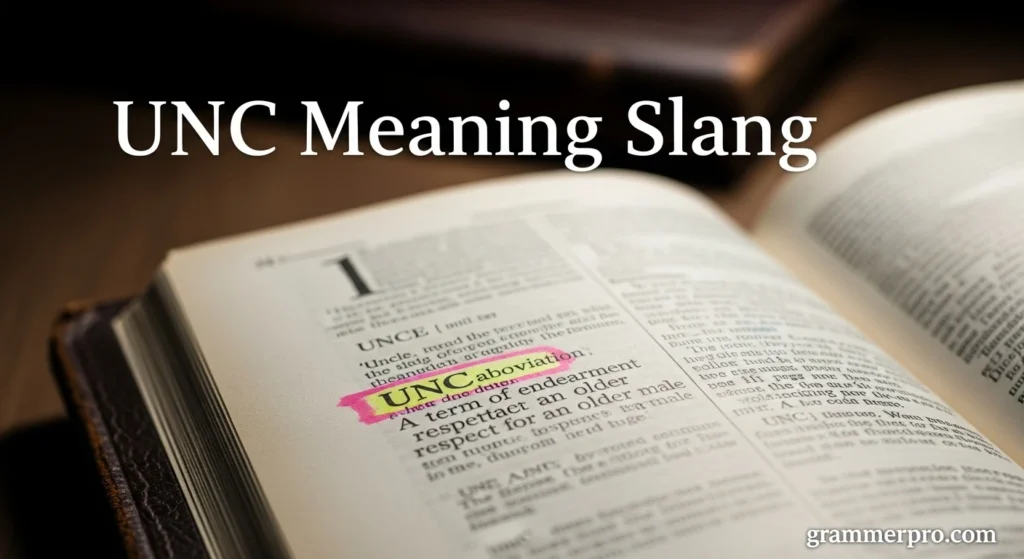
Internet slang changes quickly, and many people search online when they see a short word or abbreviation they do not understand. One expression that often confuses users in chats and comments is “UNC.” It appears in memes, messages, and social media captions, leaving many people wondering what it actually means. Learning modern internet expressions is useful because online communication relies heavily on short forms, emojis, and slang terms.
If you do not know what a term means, you might misunderstand the tone of a conversation or the intention behind a message. Understanding common texting expressions helps you communicate better with friends, avoid confusion, and stay connected with current online culture. In this guide, you will learn the real meaning behind this slang term, where it came from, how people use it on social media platforms, and how you can respond when someone sends it to you.
What Does UNC Mean in Texting and Online Chats?
Short Meaning and Full Form
The slang UNC is an abbreviation commonly used online. While its exact meaning can depend on context, the most popular interpretations include:
- “Uncle” – Used casually to refer to someone older, often in a humorous or affectionate way.
- “Uncensored” – Sometimes appears in posts or videos to indicate content that hasn’t been edited or filtered.
In texting, people often use UNC as a quick way to refer to these ideas without typing the full word.
How It Started and Gained Popularity
- The term first gained traction in chat apps and social media where abbreviations save time.
- Shortening words is common among Gen-Z users who value speed and convenience in messaging.
- Platforms like TikTok and Instagram helped spread the slang through trends, memes, and captions.
Using UNC in Real-Life Conversations
Here are some examples of how UNC might appear in everyday chats:
- Friendly/affectionate: “Hey UNC, you coming to the party tonight?” (referring to an older friend or relative playfully)
- Content-related: “This video is UNC 😱” (meaning uncensored or unfiltered content)
Platform-Specific Usage
- Often used in personal messages to refer to family members or close friends casually.
- Example: “UNC said he’ll visit next week.”
- Appears in captions or comments, sometimes indicating content that’s unfiltered or authentic.
- Example: “This photo is totally UNC, no edits!”
TikTok
- Used in video captions or text overlays to signal uncut or real content.
- Example: “Watch this UNC challenge 😎”
Snapchat
- Common in snaps or stories, usually in the playful or casual context.
- Example: “Hanging with my UNC today 🕶️”
Common Misunderstandings
Many people misinterpret UNC, thinking it might be:
- An insult or negative term
- A complicated acronym with multiple unrelated meanings
What it does NOT mean:
- It’s rarely used in professional contexts
- It does not refer to any explicit or harmful content by default
Similar Slang and Alternatives
- Fam – Casual way to refer to a friend or relative
- Bro/Brudda – Friendly terms for male friends
- NSFW – For explicit or adult content (different from UNC meaning uncensored)
- Unc – Another variation sometimes used online
How to Reply When Someone Uses UNC
Polite Responses
- “Cool, thanks for letting me know!”
- “Got it 🙂”
Casual Responses
- “Haha, nice UNC moment 😎”
- “That’s so true!”
Flirty Responses (if appropriate)
- “Oh, hey UNC 😉”
- “Can’t wait to see you!”
Boundary-Respecting Responses
- “I’m not comfortable with this topic.”
- “Let’s keep it PG, please.”
Is UNC Still Popular?
- Current trends: The slang is moderately popular, mainly among Gen-Z and younger millennials.
- Cultural relevance: While not as mainstream as terms like “LOL” or “sus,” it appears in niche communities, memes, and short-form video captions.
- Tip: If you see it used often in your circles, it’s worth understanding, but usage may fade as new slang emerges.
People Also Ask (FAQ)
Q1: Is UNC only used online? A1: Mostly, yes. It’s popular in text messaging, social media, and casual chats.
Q2: Can UNC mean something rude? A2: Not usually. It’s generally friendly or descriptive, but context matters.
Q3: How do I know which meaning of UNC is being used? A3: Look at the conversation or platform context—family references likely mean “uncle,” while content posts may mean “uncensored.”
Q4: Is UNC the same as “Unc”? A4: Yes, they are interchangeable and mean the same thing in casual chats.
Q5: Can I use UNC in professional messages? A5: It’s not recommended. Stick to formal language in professional settings.
Conclusion
Internet slang can be confusing, especially when short words appear in memes, messages, or comments without explanation. The slang term explained in this guide is simply a playful way of referring to an older man or someone acting mature, based on the word “uncle.” It became popular through online humor, memes, and social media conversations.
Today, people mostly use it jokingly in chats, captions, and comments across platforms like WhatsApp, Instagram, TikTok, and Snapchat. By understanding the context and tone, you can easily recognize when someone is using it humorously or casually. Now that you know its meaning, origin, and common responses, you can confidently understand and reply when you see this expression in online conversations.

Emily Carter is a grammar coach and freelance writer with a deep love for the English language. She writes engaging lessons and tips on punctuation, spelling, and sentence structure to help learners communicate clearly and effectively.