
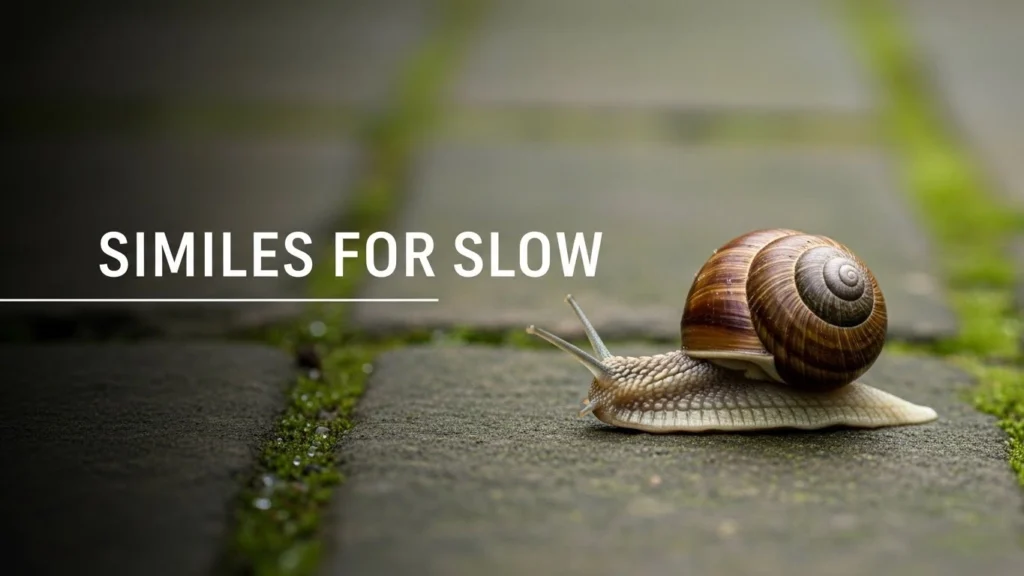
Similes are one of the most expressive tools in figurative language. They help us describe ideas, actions, and emotions by comparing them to something familiar using words like “as” or “like.” Instead of saying something is slow in a plain way, similes paint a picture in the reader’s mind. This makes writing more vivid, relatable, and memorable.
Slowness can appear in many forms—movement, thinking, progress, emotions, or even time itself. By using similes, writers can show how slow something feels rather than just stating it. That’s why similes are widely used in stories, poetry, conversations, and everyday writing. Below, you’ll find 25 carefully explained similes that help describe slowness in different tones and contexts, along with examples and practical usage tips.
1. Slow as a Snail
Meaning & Definition: Compares extreme slowness to a snail’s gradual movement.
Tone: Casual, humorous Best Used When: Describing very slow physical movement
Examples:
- The line at the bank moved as slow as a snail.
- Traffic was as slow as a snail during rush hour.
- My computer feels slow as a snail today.
Daily Use: “Why is this download moving like a snail?”
2. Slow as Molasses
Meaning & Definition: Molasses pours very slowly, making this simile perfect for dragging speed.
Tone: Conversational, slightly critical Best Used When: Complaining about delays
Examples:
- The internet is moving slow as molasses.
- His response time was slow as molasses.
- The meeting progressed slow as molasses.
Texting Example: “This app is slow as molasses 😩”
3. Slow as a Tortoise
Meaning & Definition: Refers to steady but extremely slow movement.
Tone: Neutral, descriptive Best Used When: Emphasizing patience or long progress
Examples:
- The project moved slow as a tortoise.
- He walked slow as a tortoise up the hill.
- Progress felt slow as a tortoise’s pace.
4. Slow like Watching Paint Dry
Meaning & Definition: Highlights boredom caused by slowness.
Tone: Humorous, sarcastic Best Used When: Expressing frustration
Examples:
- Waiting for results was like watching paint dry.
- The lecture felt slow like paint drying.
- The movie moved at a paint-drying pace.
5. Slow as a Glacier
Meaning & Definition: Compares slowness to glaciers that move inches per year.
Tone: Dramatic, descriptive Best Used When: Long-term delays
Examples:
- Change happened slow as a glacier.
- Bureaucracy moves like a glacier.
- His recovery was glacier-slow.
6. Slow like a Winding River
Meaning & Definition: Describes gentle, unhurried movement.
Tone: Calm, poetic Best Used When: Peaceful settings
Examples:
- The afternoon passed like a winding river.
- Her thoughts moved slow like a river bend.
- The journey unfolded gently and slowly.
7. Slow as an Old Clock
Meaning & Definition: Suggests outdated or delayed pace.
Tone: Mildly critical Best Used When: Talking about systems or technology
Examples:
- The software runs slow as an old clock.
- Their process feels outdated and slow.
- Time ticked slowly in the waiting room.
8. Slow like Heavy Fog
Meaning & Definition: Implies slow movement due to uncertainty or confusion.
Tone: Atmospheric Best Used When: Mental or emotional slowness
Examples:
- His thoughts moved like heavy fog.
- The story unfolded fog-slow and mysterious.
- Decision-making felt foggy and delayed.
9. Slow as a Sleepy Cat
Meaning & Definition: Represents lazy, relaxed slowness.
Tone: Light, playful Best Used When: Casual descriptions
Examples:
- He stretched and moved slow as a sleepy cat.
- Sunday mornings feel cat-slow.
- She walked lazily across the room.
10. Slow like Dripping Honey
Meaning & Definition: Describes smooth, thick slowness.
Tone: Sensory, poetic Best Used When: Describing motion or time
Examples:
- Time passed like dripping honey.
- His words flowed slow and sweet.
- The evening melted slowly.
11. Slow as a Broken Elevator
Meaning & Definition: Suggests frustrating slowness.
Tone: Humorous, critical Best Used When: Modern situations
Examples:
- Progress is slow as a broken elevator.
- The update process dragged painfully.
- Customer service moved at a crawl.
12. Slow like Winter Days
Meaning & Definition: Refers to time feeling longer.
Tone: Reflective Best Used When: Emotional or seasonal writing
Examples:
- Days passed slow like winter afternoons.
- Healing felt winter-slow.
- Time stretched endlessly.
13. Slow as a Rusty Door
Meaning & Definition: Implies resistance and delay.
Tone: Visual, descriptive Best Used When: Physical movement
Examples:
- The gate opened slow as a rusty door.
- Progress creaked forward.
- The process needed oiling.
14. Slow like a Traffic Jam
Meaning & Definition: Compares slowness to congested movement.
Tone: Relatable Best Used When: Daily-life situations
Examples:
- Work stalled like a traffic jam.
- Conversations went nowhere.
- Everything backed up.
15. Slow as an Aging Computer
Meaning & Definition: Modern comparison for delayed response.
Tone: Casual Best Used When: Tech-related topics
Examples:
- My laptop runs slow as an old computer.
- Apps lag constantly.
- Nothing loads quickly.
16. Slow like a Lazy Afternoon
Meaning & Definition: Suggests relaxed, unhurried time.
Tone: Calm Best Used When: Lifestyle writing
Examples:
- The day unfolded lazily.
- Time moved gently.
- Everything felt unpressured.
17. Slow as a Crawling Baby
Meaning & Definition: Shows early-stage progress.
Tone: Neutral Best Used When: Growth or learning
Examples:
- Learning felt baby-slow.
- Progress crawled forward.
- Skills developed gradually.
18. Slow like Thick Mud
Meaning & Definition: Implies difficulty moving forward.
Tone: Heavy, descriptive Best Used When: Struggle or resistance
Examples:
- The project moved through mud.
- Progress felt stuck.
- Effort required strength.
19. Slow as a Long Queue
Meaning & Definition: Relates to waiting and delay.
Tone: Everyday Best Used When: Service or processes
Examples:
- Service was queue-slow.
- Time dragged on.
- Waiting tested patience.
20. Slow like a Ticking Hourglass
Meaning & Definition: Emphasizes time slipping slowly.
Tone: Poetic Best Used When: Reflective writing
Examples:
- Moments passed grain by grain.
- Time felt deliberate.
- Seconds stretched.
21. Slow as a Yawning Morning
Meaning & Definition: Suggests sleepy beginnings.
Tone: Gentle Best Used When: Daily routines
Examples:
- The morning started slow.
- Energy took time.
- Everything eased awake.
22. Slow like an Unwound Clock
Meaning & Definition: Implies loss of momentum.
Tone: Symbolic Best Used When: Emotional or mental states
Examples:
- Motivation slowed.
- Energy faded.
- Progress stalled.
23. Slow as a Drifting Cloud
Meaning & Definition: Gentle, effortless slowness.
Tone: Peaceful Best Used When: Nature writing
Examples:
- Thoughts drifted slowly.
- Time floated by.
- The scene felt calm.
24. Slow like a Fading Sunset
Meaning & Definition: Gradual and quiet slowness.
Tone: Emotional Best Used When: Endings or transitions
Examples:
- The day ended slowly.
- Feelings faded gently.
- Moments lingered.
25. Slow as a Forgotten Road
Meaning & Definition: Suggests neglect and inactivity.
Tone: Reflective Best Used When: Abandoned progress
Examples:
- The plan moved slowly.
- Efforts were ignored.
- Momentum vanished.
Why Using Similes for Slow Improves Writing
- Makes descriptions more vivid
- Helps readers visualize pace
- Adds emotional depth
- Enhances storytelling and SEO richness
FAQs
1. What are similes used for? They compare two things to make descriptions clearer and more engaging.
2. Are similes good for SEO writing? Yes, they improve readability, dwell time, and content richness.
3. Can similes be used in daily conversation? Absolutely. Many similes are common in everyday speech.
4. What’s the difference between similes and metaphors? Similes use “like” or “as,” while metaphors do not.
5. How do I choose the right simile for slow? Pick one that matches the tone—humorous, serious, or poetic.
Conclusion
Similes turn ordinary descriptions into memorable expressions. When describing slowness, the right comparison can capture emotion, pace, and mood in a way plain words cannot. Whether you’re writing creatively, improving daily communication, or enhancing SEO content, using similes thoughtfully adds clarity and charm. With these examples, you now have a rich toolkit to describe slow moments with creativity and confidence.

David Langford is a language expert and grammar enthusiast with over 10 years of teaching experience. He specializes in simplifying complex grammar rules and helping writers express ideas with clarity. At GrammerPro, David shares practical guides for mastering English usage.