
The moon has always captured human imagination, shining as a symbol of mystery, romance, and reflection. Writers, poets, and dreamers have used it to express emotions that words alone could never convey. When people search for “similes for the moon,” they are looking for creative ways to describe the moon’s beauty, brightness, and emotional symbolism. A simile compares one thing to another using words like “as” or “like.” These comparisons allow writers to build vivid pictures in readers’ minds, making their work more expressive and engaging. In this article, we will explore the best similes for the moon, how to use them in writing, and what makes them effective in literature and creative expression.
What Are Similes for the Moon?
A simile for the moon is a figure of speech that uses a comparison to describe the moon’s appearance, light, or emotional impact. For example, saying “the moon was like a silver coin in the night sky” creates an image of roundness and brightness. The moon often represents calmness, love, loneliness, and time. Similes allow writers to translate these feelings into visuals that readers can easily relate to. Whether you’re crafting a poem, novel, or descriptive essay, choosing the right simile can strengthen your emotional tone and make your description memorable.
Why Similes for the Moon Matter in Writing
The moon’s presence in literature dates back to ancient times. It appears in mythologies, poems, and songs as a source of light and inspiration. Using similes helps writers achieve three goals. First, they make the description of the moon more personal and specific. Second, they help readers experience what the author sees or feels. Third, they add rhythm and poetic quality to the text. A strong simile transforms simple imagery into emotional storytelling. For instance, instead of saying “the moon was bright,” you could write “the moon was as bright as a diamond polished by night itself.” This approach adds texture, emotion, and creativity.
Common Themes in Moon Similes
Writers often connect the moon with themes of romance, solitude, mystery, and change. Depending on the tone of your work, a simile can highlight different moods:
- Romantic tone: The moon is like a lover’s gaze, soft and glowing.
- Lonely tone: The moon is as silent as an empty heart.
- Mysterious tone: The moon hangs like a secret in the sky.
- Peaceful tone: The moonlight spreads like a blanket over the sleeping world.
These examples show how flexible moon imagery can be. Each comparison changes the emotional meaning while keeping the same visual reference.
Romantic Similes for the Moon
Romantic similes describe the moon as something gentle, alluring, and affectionate. They work well in love poems, romantic stories, and emotional scenes. Here are a few beautiful examples:
- The moon was like a pearl resting in the ocean of the night.
- The moon shone as softly as a lover’s whisper.
- Like a faithful companion, the moon followed us wherever we went.
- The moonlight wrapped around us like a tender embrace.
- The moon was as shy as a bride behind her veil of clouds.
These expressions create warmth and intimacy, adding emotional richness to any romantic writing.
Bright and Beautiful Moon Similes
Writers often compare the moon to bright, reflective, or precious objects. Such similes are great for describing peaceful nights or clear skies.
- The moon was like a lantern lighting the dark.
- It glowed as bright as polished silver.
- The moon floated like a crystal orb above the horizon.
- Like a glowing coin, the moon shimmered in the velvet sky.
- The moon was as radiant as morning dew on a rose petal.
These comparisons emphasize clarity, beauty, and calmness. They make the moon appear both majestic and gentle at the same time.
Dark and Mysterious Similes for the Moon
When the mood of your story is eerie or somber, dark similes work best. They express unease, curiosity, or sadness.
- The moon hung like a ghostly eye watching the earth below.
- The moon was as pale as a spirit’s face.
- Like a faded memory, the moon hovered in the distance.
- The moonlight crept through the trees like a thief in the night.
- The moon glowed as cold as forgotten steel.
Writers use these images to build suspense or explore darker emotions. They are common in gothic or psychological fiction, where the moon becomes a silent observer of human fear or sorrow.
Emotional and Reflective Moon Similes
Emotional similes help readers feel the mood behind the description. The moon can reflect longing, hope, nostalgia, or sadness.
- The moon was like a tear frozen in the sky.
- It glowed like a promise kept by time.
- The moon shone as constant as memory.
- Like a lonely friend, the moon watched over me.
- The moonlight was as fragile as a fading dream.
These examples connect the natural image of the moon with human emotions, deepening the emotional resonance of the scene.
Creative and Unusual Similes for the Moon
Originality makes writing memorable. Unusual similes for the moon surprise readers and make descriptions stand out.
- The moon was like a cookie bitten by the universe.
- It glowed like butter melting across the sky.
- The moon hung like a paper lantern drifting on wind.
- Like spilled milk, the moonlight spread over the rooftops.
- The moon was as round as a drum keeping time with the night.
Such creative imagery adds freshness to poems, short stories, and novels. These similes can be funny, playful, or imaginative, depending on the context.
Similes for Different Phases of the Moon
The moon changes shape every night, offering opportunities for specific similes.
Crescent Moon
- The crescent moon was like a silver smile.
- It curved as sharp as a scythe cutting through the sky.
- The moon was as delicate as a fingernail clipping of light.
Half Moon
- The moon looked like a coin split in two.
- It glowed as if torn between day and night.
Full Moon
- The full moon was like a glowing shield of light.
- It shone as complete as a finished song.
These phase-based similes add accuracy and detail, helping readers visualize the scene clearly.
How to Write Your Own Similes for the Moon
Writing similes is an art. Follow these steps to create original comparisons:
- Observe carefully – Look at how the moon behaves: its brightness, shape, and mood.
- Choose a comparison object – Find something similar in shape, color, or feeling.
- Use emotional context – Decide what you want the moon to symbolize.
- Keep it simple – Avoid long or confusing comparisons.
- Test your imagery – Read it aloud to see if it sounds natural.
Example process: You look at a full moon. It reminds you of a glowing pearl. You think of calmness and beauty. You write, “The moon was like a pearl resting on black velvet.”
Differences Between Similes and Metaphors for the Moon
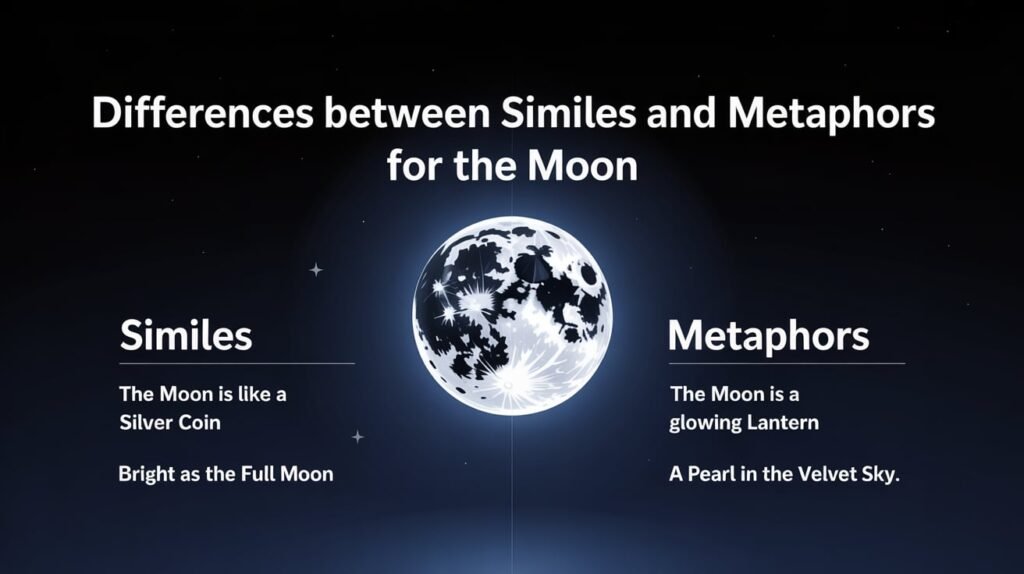
Both similes and metaphors enhance writing, but they do so differently.
FeatureSimileMetaphorDefinitionCompares using “like” or “as”Describes one thing as anotherExampleThe moon was like a lantern.The moon was a lantern.ToneSofter and more flexibleStronger and more direct
Using both techniques can enrich writing. Start with a simile for clarity, then use a metaphor for intensity.
Examples of Moon Similes in Literature
Many famous writers have used moon imagery beautifully. Consider these literary examples:
- Shakespeare described the moon as “a silver bow new-bent in heaven.”
- Emily Dickinson wrote of “a smiling moon,” turning nature into emotion.
- In modern poetry, the moon often appears as a “mirror of time,” reflecting human memory.
These examples show that moon similes have evolved across centuries yet remain powerful in expressing human experience.
Common Mistakes to Avoid When Using Moon Similes
Even beautiful imagery can lose its effect when overused or misplaced. Avoid these mistakes:
- Clichés like “bright as the moon” offer no new image.
- Too many similes in one paragraph can overwhelm the reader.
- Mixed comparisons confuse tone or meaning.
- Forcing emotion makes the writing sound unnatural.
Keep descriptions balanced and relevant to the scene’s purpose.
Practical Uses for Moon Similes
Moon similes can enhance many forms of writing:
- Poetry: Add emotion, rhythm, and symbolism.
- Fiction: Set tone or describe nighttime scenes.
- Essays: Use in reflective or descriptive sections.
- Songwriting: Express love, distance, or nostalgia.
They can also work in visual arts, captions, and storytelling where imagery matters.
Table: Types of Moon Similes and Their Effects
CategoryExampleEmotional EffectRomanticThe moon was like a lover’s eye.Intimacy and affectionPeacefulThe moonlight spread like silk.Calm and relaxationMysteriousThe moon hid like a secret.Suspense and curiosityLonelyThe moon glowed like a memory.Sadness and nostalgiaCreativeThe moon was like a bitten cookie.Humor and originality
This classification helps writers choose similes that fit their tone and genre.
SEO-Friendly Writing Tips for Using Moon Similes
If you are publishing an article or blog post about similes for the moon, optimize it for search engines. Use the focus keyword naturally in the introduction, subheadings, and conclusion. Keep paragraphs short, use transition words like “therefore,” “moreover,” and “however,” and avoid excessive passive voice. Related keywords include “moon comparisons,” “descriptive writing,” and “literary imagery.” Adding internal links to other articles such as “best metaphors for the sun” or “examples of personification in poetry” can improve ranking and engagement.
FAQs About Similes for the Moon
1. What is a good simile for the moon? A good simile for the moon connects its appearance to something visual and emotional, such as “the moon was like a glowing pearl” or “the moon shone as bright as polished silver.”
2. How can I use similes for the moon in creative writing? Use them to set mood, describe scenes, or express feelings. For example, in romance, mystery, or reflective passages.
3. What is the difference between a simile and a metaphor for the moon? A simile uses “like” or “as” to compare, while a metaphor says the moon is something else, creating a stronger image.
4. Why do poets often use the moon in their similes? Because the moon represents beauty, emotion, and time, it helps express universal feelings like love and loneliness.
5. Can I create my own moon similes easily? Yes. Focus on what the moon reminds you of, then form a comparison. The more personal and specific, the more original your simile becomes.
Conclusion
Similes for the moon enrich writing by turning a simple image into an emotional experience. They allow readers to see, feel, and connect with the text on a deeper level. From romantic expressions to eerie descriptions, the moon can take on countless forms through creative comparison. Whether you’re a poet, novelist, or student, using similes for the moon helps your writing glow with imagination and meaning. By practicing thoughtful observation and originality, your descriptions can shine as beautifully as the moon itself.
